Porsche Wheel Alignment Explained: Signs, Benefits and When to Book
Precise wheel alignment is one of those things you might not think about until something actually feels slightly… off. Your Porsche still drives; the engine sounds great and everything appears to be working as it should. But the steering feels a little strange, the car seems to wander, or you’ve noticed your tyres are wearing in places they really shouldn’t.
That is where a Porsche wheel alignment comes in!
Correct alignment is essential to maintaining the sharp handling characteristics that make a Porsche so enjoyable to drive, while also helping to maximise tyre life. Get it right and the car should feel composed, predictable and confident. Get it wrong and even a perfectly healthy Porsche can feel noticeably less settled.
What is wheel alignment?
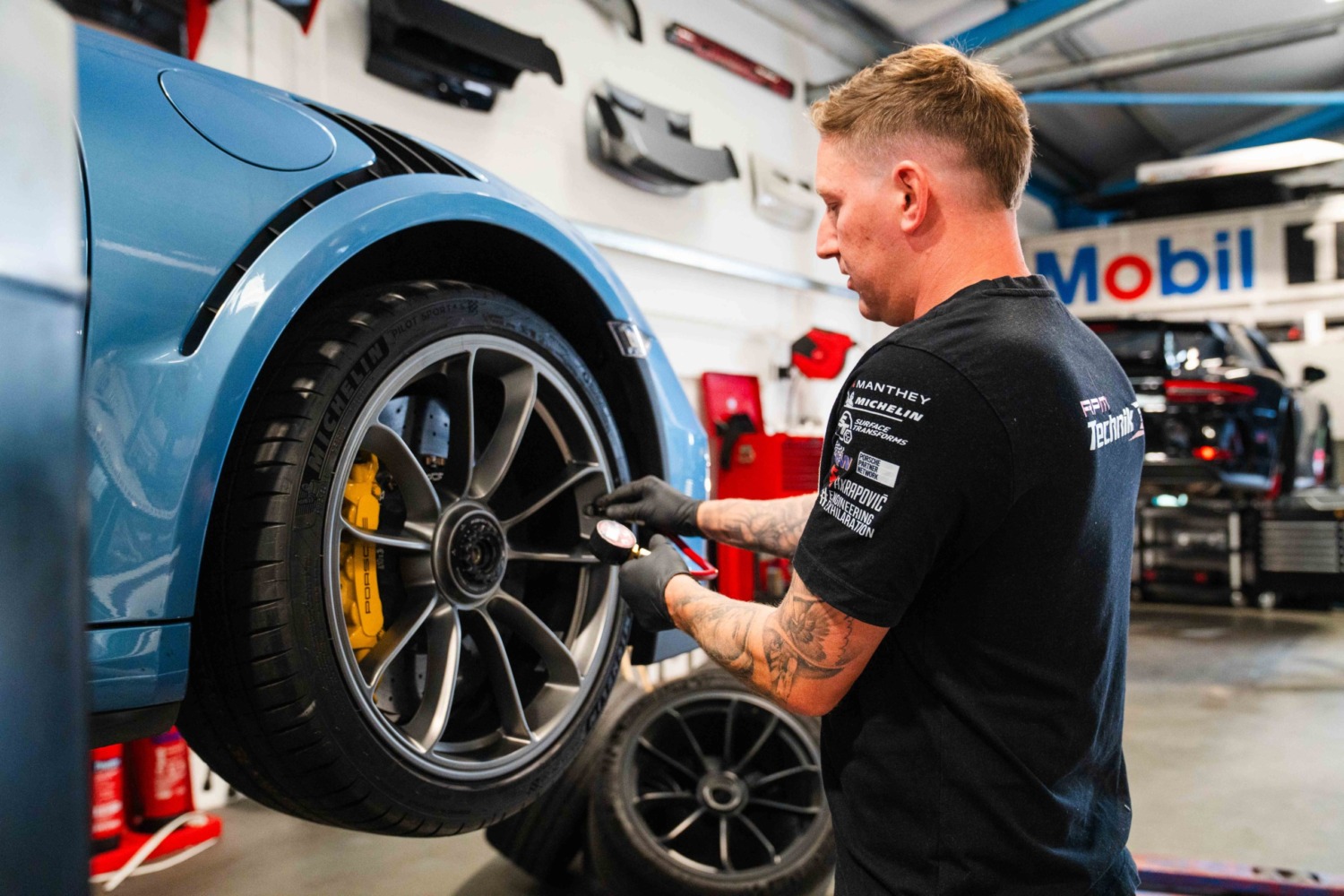
Wheel alignment is the process of checking and, where necessary, adjusting the angles of the wheels via the suspension components, so they sit correctly in relation to the road and the rest of the car. It isn’t simply about making sure all four wheels point in exactly the same direction. Porsche suspension geometry involves several different measurements, including camber and toe, these all influence how the car behaves.
The correct settings vary depending on the Porsche model, suspension specification and intended use. A road-going 911, for example, won’t have the same alignment requirements as a GT3 RS being used regularly on track.
Wheel alignment vs wheel balancing
It’s easy to confuse alignment with wheel balancing, but they solve completely different problems.
Wheel balancing deals with the weight distribution of the individual wheel and tyre assembly. If a wheel is out of balance, you may experience vibration, particularly at higher speeds.
Wheel alignment on the other hand, deals with the position and angles of the wheels and suspension. If the alignment is incorrect, you may notice the car pulling to one side, uneven tyre wear or changes in the way it responds to steering inputs. In other words, balancing is about stopping your wheels from shaking their way down the motorway. Alignment is about making sure they’re actually pointing where they should.
Signs your Porsche needs an alignment check
Your Porsche will often give you some clues if its alignment has moved out of specification. Some are obvious, while others can be surprisingly subtle.
The car pulls to one side
If your Porsche consistently drifts or pulls left or right when you’re driving on a reasonably flat road, it could be a sign that the wheel alignment needs checking. Road camber can naturally cause a car to move slightly towards one side, so this isn’t automatically proof of an alignment problem. However, a persistent or noticeable pull is worth investigating.
Uneven tyre wear
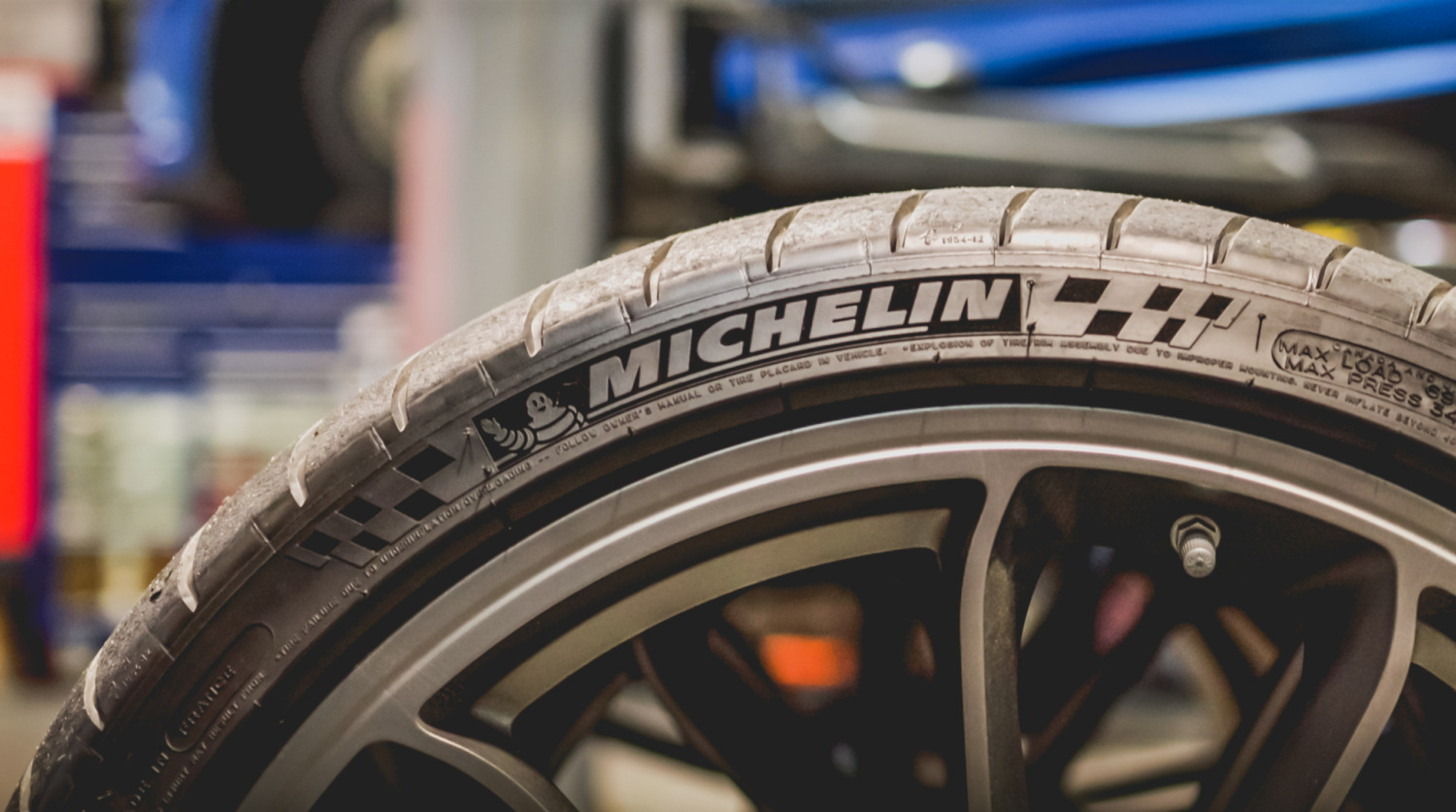
One of the biggest clues is often found on the tyres themselves. Incorrect alignment can cause the tread to wear unevenly across the tyre. You might see more wear on the inside/ outside edge or notice that the tyres are wearing considerably faster than expected.
This is particularly important on a Porsche because performance tyres aren’t exactly famous for being inexpensive. Correct alignment can help you get the maximum useful life from them. For more information, see our guide to Porsche tyres and why choosing the right tyre matters.
The steering wheel isn’t straight
If you’re driving in a straight line but the steering wheel sits noticeably off-centre, your alignment likely needs attention. It can be particularly noticeable after suspension components have been removed or replaced, as even relatively small changes can affect the geometry.
The car doesn’t feel as confident as it should
This one can be harder to put your finger on. Perhaps the Porsche doesn’t feel quite as planted through faster corners, requires more steering correction on a motorway or simply doesn’t respond as naturally as you remember. That doesn’t necessarily mean alignment is the culprit, but if something about the car’s handling feels different, checking the geometry is a sensible place to start.
When should you have your Porsche’s alignment checked?
There isn’t a fixed mileage interval at which every Porsche needs an alignment. Unlike an oil change or brake inspection, alignment isn’t something that always needs to be carried out at a specific point on the service schedule. Instead, it’s sensible to have the alignment checked when something has happened that could have altered the suspension geometry.
This includes:
- After suspension work or replacement of suspension components
- Following a significant pothole impact
- After hitting a kerb
- When fitting new tyres
- If you notice uneven tyre wear
- If the steering wheel is no longer centred
- If the car starts pulling to one side
- If the handling feels different or less settled
It’s also essential to have an alignment check when changing or upgrading suspension components. Even if the work has been carried out correctly, altering suspension components can change the geometry and therefore the way the car behaves. You can read more about Porsche suspension and the importance of keeping these components in good condition in our dedicated guide.
Why Porsche wheel alignment should be carried out by a specialist
A wheel alignment machine can tell you what the current geometry is, but the machine itself doesn’t make the decisions. The important part is understanding what those measurements mean and knowing what the correct settings should be for the particular Porsche being worked on. Porsche models can have very specific alignment requirements, and the correct settings depend on the model, suspension configuration and, in some cases, how the car is being used. A Porsche specialist should be able to work to the relevant manufacturer specifications and understand how changes to geometry can affect the car’s handling.
An alignment should be considered as part of the wider picture rather than simply a case of getting four green numbers on a screen. Tyres, suspension condition, ride height and the car’s intended use can all have a bearing on the final result. There’s little point carrying out a beautifully precise alignment on a suspension component that is worn or a tyre that’s already past its best.
Keep your Porsche driving like a Porsche
Wheel alignment might not be the most glamorous job in the workshop, but it can make a surprisingly significant, noticeable and instantaneous difference to the way your Porsche drives. Correct geometry helps maintain the steering response, stability and handling characteristics Porsche owners expect, while also helping to prevent unnecessary and uneven tyre wear. If your Porsche has recently had suspension work, taken a memorable encounter with a pothole or kerb, or simply doesn’t feel quite right, an alignment check is well worth considering.
And if you’re already booking your car in for Porsche servicing, it’s a good opportunity to ask whether the alignment, tyres and suspension should be checked at the same time. Because when a Porsche feels right, you know about it. And when it doesn’t, you usually know about that too.
For more information, speak to our team about arranging a wheel alignment check for your Porsche.
LOOKING TO BOOK YOUR PORSCHE WHEEL ALIGNMENT?
Please get in touch with our team for more information