Minor vs Major Porsche Service: What’s the Difference?
If you own a Porsche or any car really, you’ve almost definitely come across the terms minor service, major service, intermediate service and maintenance service. They appear on quotes, invoices and service books, often without much explanation of what separates one from another. So, what actually is the difference between a Porsche minor service and a major service?
The short answer is that they serve different purposes. A minor service covers essential routine maintenance, while a major service builds on that work with additional replacement items and more extensive checks. Knowing which one your Porsche is due, helps you keep it in the best possible condition with all the right stamps in your service book! Whether it’s a daily driver, a weekend toy or something a little more track-focused.
What is a Porsche minor service?
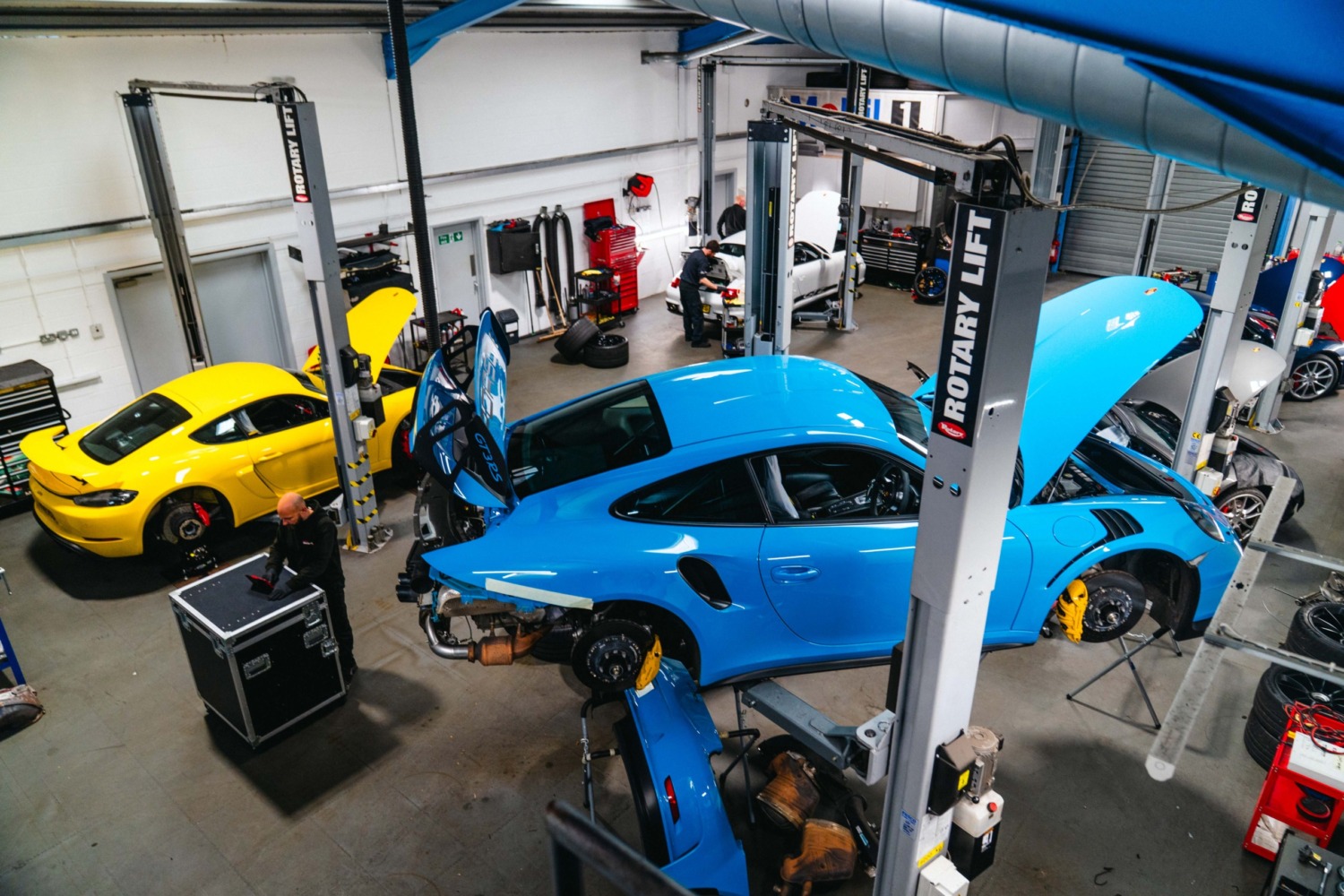
A Porsche minor service is designed to cover the essential maintenance your car needs between more extensive services. It typically centres on changing the engine oil and oil filter, alongside a series of checks to make sure everything is working as it should. Engine oil is particularly important in a Porsche. Whether you’re running an air-cooled classic or a modern turbocharged 911, the oil lubricates moving components, helps manage temperatures and carries away contaminants. Over time, it degrades and becomes contaminated, which is why regular oil changes matter even if your car spends more time in the garage than on the road.
Alongside the oil and filter change, a minor service generally includes core safety and condition checks. These would cover the brakes, tyres, lights, fluid levels and other key components, depending on the model and the service schedule. The idea is straightforward: keep on top of the essentials, identify developing issues early and make sure your Porsche is ready for the miles ahead. A minor service isn’t a lesser-quality service, nor is it an excuse to give the car a quick once-over and send it on its way. It’s an important part of a properly maintained Porsche.
What is a Porsche major service?
A Porsche major service covers the routine maintenance required at a more comprehensive point in the car’s servicing schedule. It includes the core work associated with routine servicing, with additional replacement items and inspections where they’re due. Depending on the model, age and engine, this can include additional filters, spark plugs and other scheduled maintenance items. More extensive inspections may also be required, alongside model-specific checks that reflect the car’s mechanical design. For example, spark plugs are a scheduled maintenance item on applicable petrol engines. They play an important role in combustion and replacing them when required helps maintain proper engine operation. Even if the car is not driven often, the spark plugs can deteriorate and cause potential issues. Other filters and components also have their own replacement schedules, so a major service is an opportunity to address the items that aren’t necessarily due at every visit.
The important point is that a major service isn’t simply a minor service with a few extra jobs thrown in. It forms part of a planned maintenance programme designed around the requirements of your particular Porsche. Exactly what is required depends on the model and its service history. An air-cooled 911 and a modern Cayenne have very different mechanical layouts, so their maintenance requirements won’t be identical.
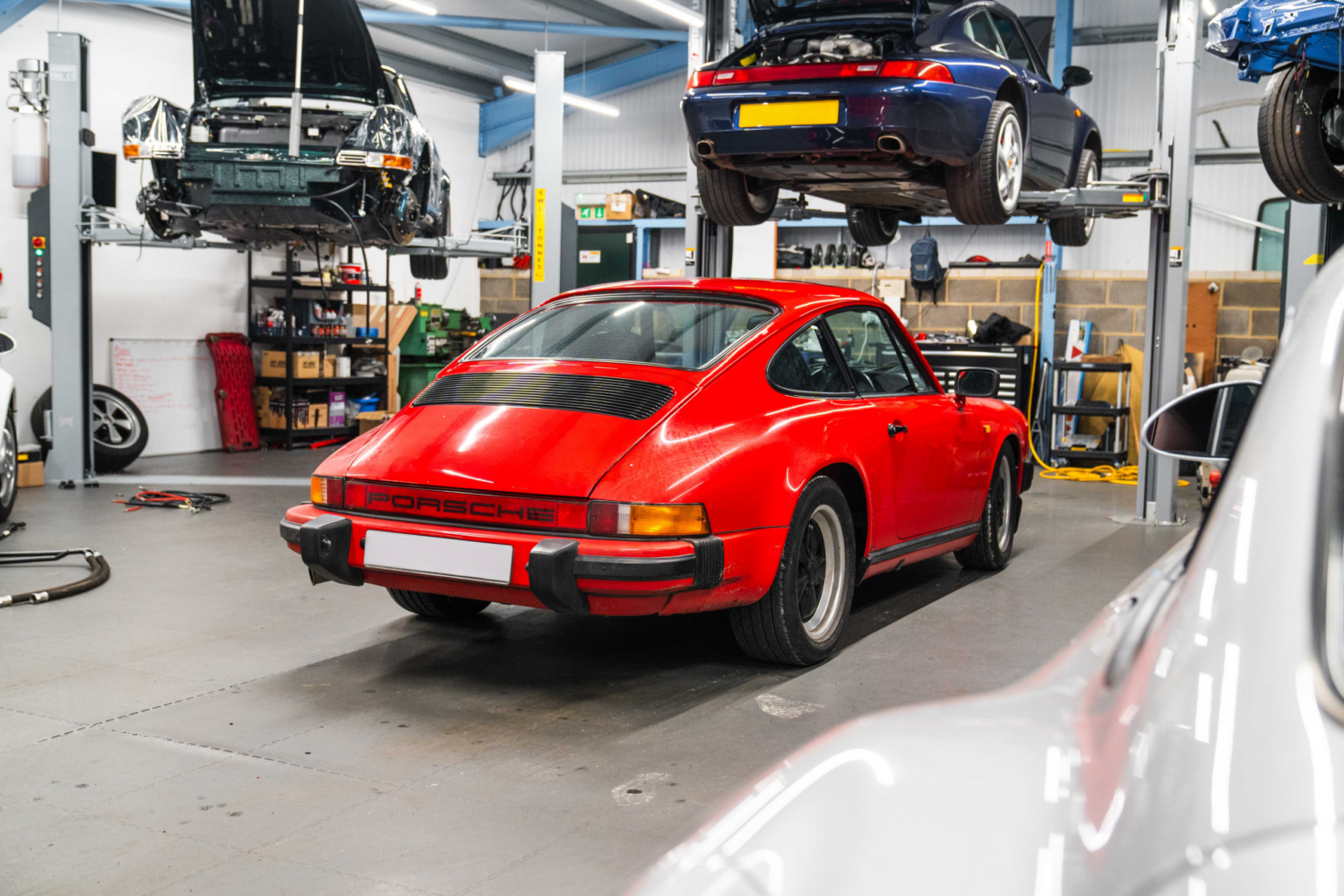
Porsche minor vs major service: How do they alternate?
For many Porsche models, routine servicing follows an alternating pattern. A minor service is followed by a major service, with the next minor service coming afterwards, and so on. Think of it as a maintenance cycle rather than two completely separate options. The minor service covers the essentials, while the major service addresses additional items at the appropriate point in the schedule.
However, the pattern isn’t identical across every Porsche. Service requirements have evolved over the decades, and different engines, model years and vehicle systems bring different maintenance needs. Here’s why it’s important to look at the car itself rather than assume every Porsche follows the same rules.
Air-cooled Porsche 911s
An air-cooled 911 has a very different maintenance profile from a modern Porsche. Engine design, age, mileage and previous work all influence what needs attention during a service. Regular oil changes remain fundamental, but an older car may also require closer attention to age-related components, leaks, ignition systems and a myriad of other mechanical details dependant on the specific model. A major service should be considered in the context of the car’s prescribed maintenance schedule and its individual condition.
For classic Porsches, a complete and consistent service history is particularly useful. It helps establish what has been done, when it was done and whether any important maintenance has been overlooked.
Water-cooled Porsche 911 Carrera models
Water-cooled Carrera models have their own service schedules, which vary between generations and engine configurations. As well as routine oil and filter changes, additional maintenance items such as spark plugs and other filters become due at specified points. The precise requirements depend on the model year and engine, so it’s worth checking the correct schedule rather than relying on what was required for your previous 911.
If you own a 997, 991 or 992, the underlying principle is the same: follow the maintenance programme for your particular car, not a generic schedule found online.
Porsche GT models
GT models such as the GT3 and GT4 still require routine scheduled servicing, but their intended use can make the condition of certain components especially important. A GT car that spends its life cruising along country roads may have very different maintenance needs in practice from one that regularly visits Silverstone or another circuit. Heavy track use can increase wear on brakes, tyres and other components, meaning additional inspections may be sensible alongside the scheduled service.
That doesn’t mean every GT car automatically needs more frequent major services. It means the service schedule should be considered alongside how the car is driven, with any additional maintenance based on its condition and use.
Porsche Macan and Cayenne
The Macan and Cayenne have their own maintenance requirements, reflecting their engines, drivetrains and equipment. Depending on the model, the scheduled service may involve additional filters, spark plugs or other model-specific items. Four-wheel-drive systems and other mechanical components also need to be considered in accordance with Porsches maintenance programme.
Again, there’s no single rule that applies to every Macan or Cayenne. The correct schedule for your car is the best starting point.
Want to know exactly what your Porsche needs? Visit our Porsche fixed-price servicing pages to find the relevant information for your model. Our servicing hours are half the cost of that at Official Porsche Centres, providing you great value without sacrificing quality of service!
Can you skip a major service if you hardly drive your Porsche?
This is one of the most common questions we hear, particularly from owners who keep their cars for weekends, special occasions or the occasional sunny afternoon. The temptation is understandable. If you’ve only covered a couple of thousand miles since your last service, surely there can’t be much to do? Not necessarily.
Mileage is only one part of the equation. Some maintenance items are triggered by distance travelled, while others are affected by time, operating conditions or the manufacturer’s recommended schedule. Engine oil, for example, can deteriorate over time even when the car isn’t covering many miles. There’s also a difference between a car that has covered very few miles and one that has been maintained correctly throughout its life. A low-mileage Porsche can still develop issues through age, infrequent use or prolonged periods of standing.
If your car is due a major service according to its maintenance schedule, low mileage alone isn’t a good reason to skip it. Doing so may leave scheduled items overdue and make it harder to establish that the car has been maintained correctly. Instead, check the requirements for your model and discuss any unusual usage patterns with your Porsche specialist. The right approach is to establish what is actually due, rather than assume that fewer miles mean fewer maintenance requirements.
For more on the relationship between mileage, time and oil changes, read our blog: Is Two Years Too Long Between Your Porsche Oil Changes?.
What happens if Porsche services are carried out of sequence?
Ideally, your Porsche should follow its prescribed service schedule, with the relevant maintenance items completed at the appropriate time. Real life, of course, doesn’t always follow a neat pattern. Perhaps a previous owner had additional work carried out, a service was brought forward, or the car has a gap in its history. In these situations, the key is to establish what has actually been completed and what remains outstanding. A service being labelled “minor” or “major” on an invoice doesn’t necessarily tell the whole story. The important question is whether the required maintenance items were carried out.
For example, if a car has received an oil and filter change but its spark plugs are also due under the manufacturer’s schedule, an oil change alone won’t satisfy that additional requirement. Equally, a service described as major may have included work that was brought forward from a previous visit. A Porsche specialist can review the available service records, establish the car’s current requirements and help determine the next appropriate service. This is particularly useful for cars with incomplete histories or those that have recently changed hands.
The aim isn’t to force every car into a rigid minor-major-minor sequence regardless of its history. It’s to make sure the maintenance schedule is properly accounted for, without overlooking important items or unnecessarily repeating work.
What if a Porsche service book is missing a major service?
A missing major service entry can raise questions when buying a used Porsche, but it doesn’t automatically mean the car has been neglected. First, it’s worth checking the wider history. An invoice may show that the relevant work was completed even if the service book wasn’t stamped. Digital records, workshop invoices and supporting maintenance documentation can all help establish what has been done.
If there’s no evidence that the required work was carried out, however, it’s sensible to treat the missing information as an unknown rather than assume everything is fine. This matters because a service history is more than a collection of stamps. It should provide a credible record of how the car has been maintained throughout its life. If you’re considering buying a Porsche with gaps in its history, a pre-purchase inspection can help assess its current condition and identify any maintenance concerns. It won’t recreate missing records or prove that every historical service was completed, but it can provide a clearer picture of the car you’re considering.
At RPM Technik, our Porsche pre-purchase inspections are designed to give prospective buyers a better understanding of a car’s condition before committing to a purchase.
Don’t forget the time-based maintenance
Minor and major services aren’t the only entries worth paying attention to in your Porsche’s maintenance history. Some items follow their own time-based schedules, with brake fluid being a good example. It absorbs moisture over time, which can affect braking performance, so it may be due for replacement independently of whether the car needs a minor or major service. As fluids and components degrade they can cause potential safety problems, such as causing the braking system to not operate as effectively as it was designed. Safety is a vital reason to stay on top of a regular service schedule, servicing isn’t just about maintaining your Porsche’s value, it’s about making sure it performs as it should in terms of overall safety and functionality.
Other requirements will depend on the particular model and its equipment. This is another reason why looking at the full maintenance schedule is more useful than focusing solely on the service label. When reviewing your Porsche’s service history, make sure these separate maintenance requirements are accounted for too.
So, which Porsche service does your car need next?
The difference between a Porsche minor service and a major service comes down to the maintenance required at each stage of the manufacturer’s schedule. A minor service covers essential routine maintenance and checks, while a major service adds the further replacement items and inspections due at that point in the car’s life. Neither should be viewed as optional simply because the car covers relatively few miles, and a service book’s labels alone don’t always tell the full story.
At RPM Technik, we work with Porsches from air-cooled classics through to the latest GT models and modern SUVs. We understand that each car has its own maintenance requirements, and that a sensible servicing plan needs to account for its model, history and how it’s used. If you’re unsure whether your Porsche is due a minor service, a major service or something in between, take a look at our Porsche servicing information and fixed-price servicing pages, or get in touch with the team. We’ll help you establish what’s due next and make sure your car gets the attention it needs.
Because the best service history is one you can explain with confidence not one that requires a detective, three old invoices and a very strong cup of tea.
LOOKING TO BOOK IN YOUR PORSCHE SERVICE?
Please get in touch with our team for bookings