Why Every Porsche Owner Needs to Consider a Vehicle Inspection
Whether you’re buying your first Porsche, adding another one to the garage or simply want to know that your pride and joy is in good health, a Porsche vehicle inspection can be one of the most worthwhile checks you can arrange. It is easy to think of inspections as just something you do when you’re buying a used car, but they can be just as valuable once a Porsche is already in your ownership. After all, most owners don’t book an appointment with a Porsche specialist because everything is going perfectly. They usually arrive when something has started making a noise it shouldn’t, a warning light has appeared, or the car has decided that today is the day to introduce you to the concept of an expensive repair bill.
The good news is that preventative checks can often identify developing issues before they turn into major problems.
What is a Porsche vehicle inspection?
An inspection is essentially a health check for your car. It is designed to give you a clear picture of the vehicle’s current condition and highlight anything that may need attention, whether that’s immediately or further down the road. Exactly what is checked will depend on the Porsche itself, its age, mileage and specification, but a thorough inspection should look beyond the obvious. It’s not simply a case of checking that the lights work and giving the tyres a quick kick.
With us, an inspection will cover the car’s mechanical, electrical and diagnostic systems, giving you a much better understanding of what’s happening underneath the bodywork.
Pre-Purchase Inspection (PPI)
If you’re considering buying a Porsche privately, a PPI is one of the best ways to find out exactly what you’re taking on before you hand over the keys (and the money).
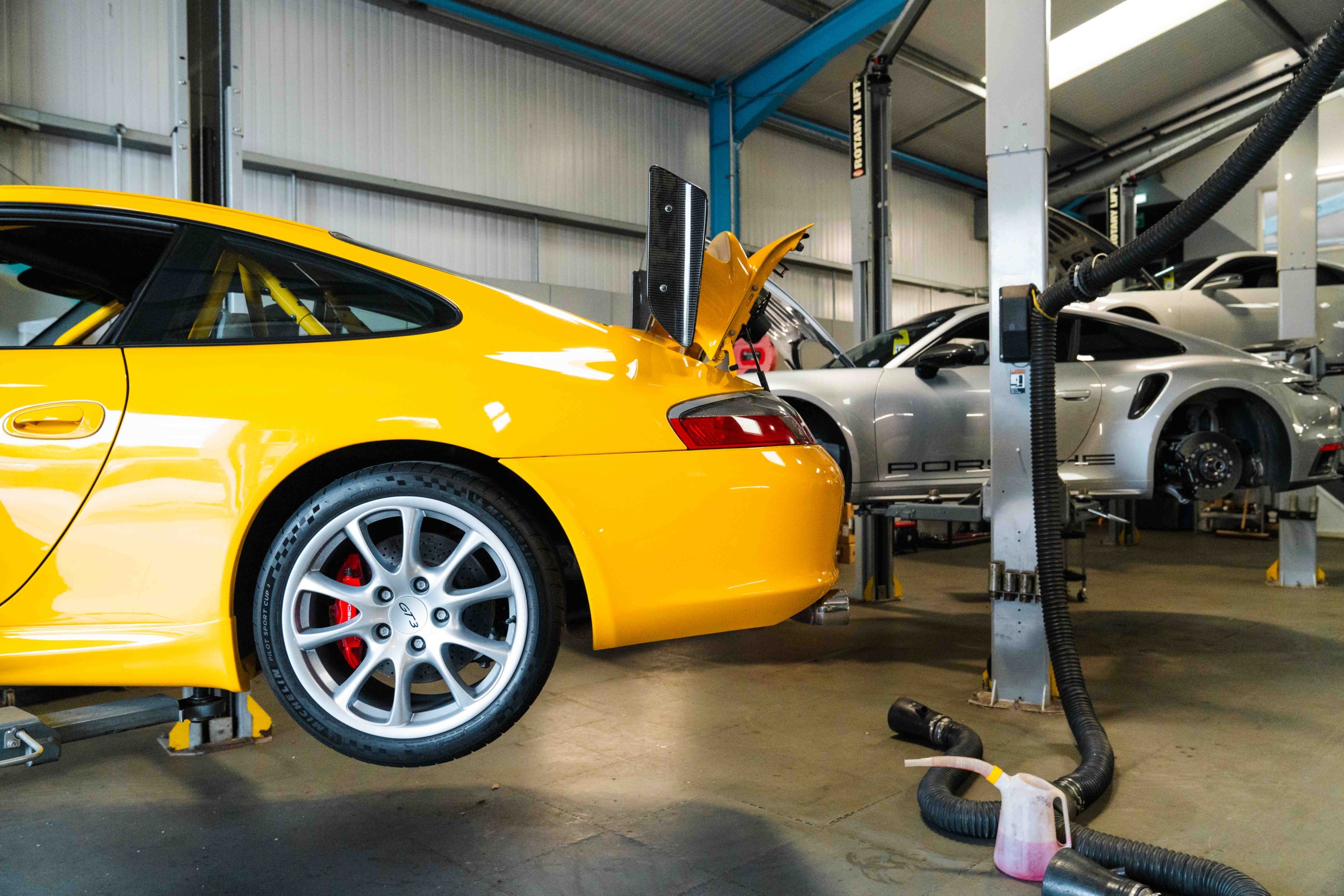
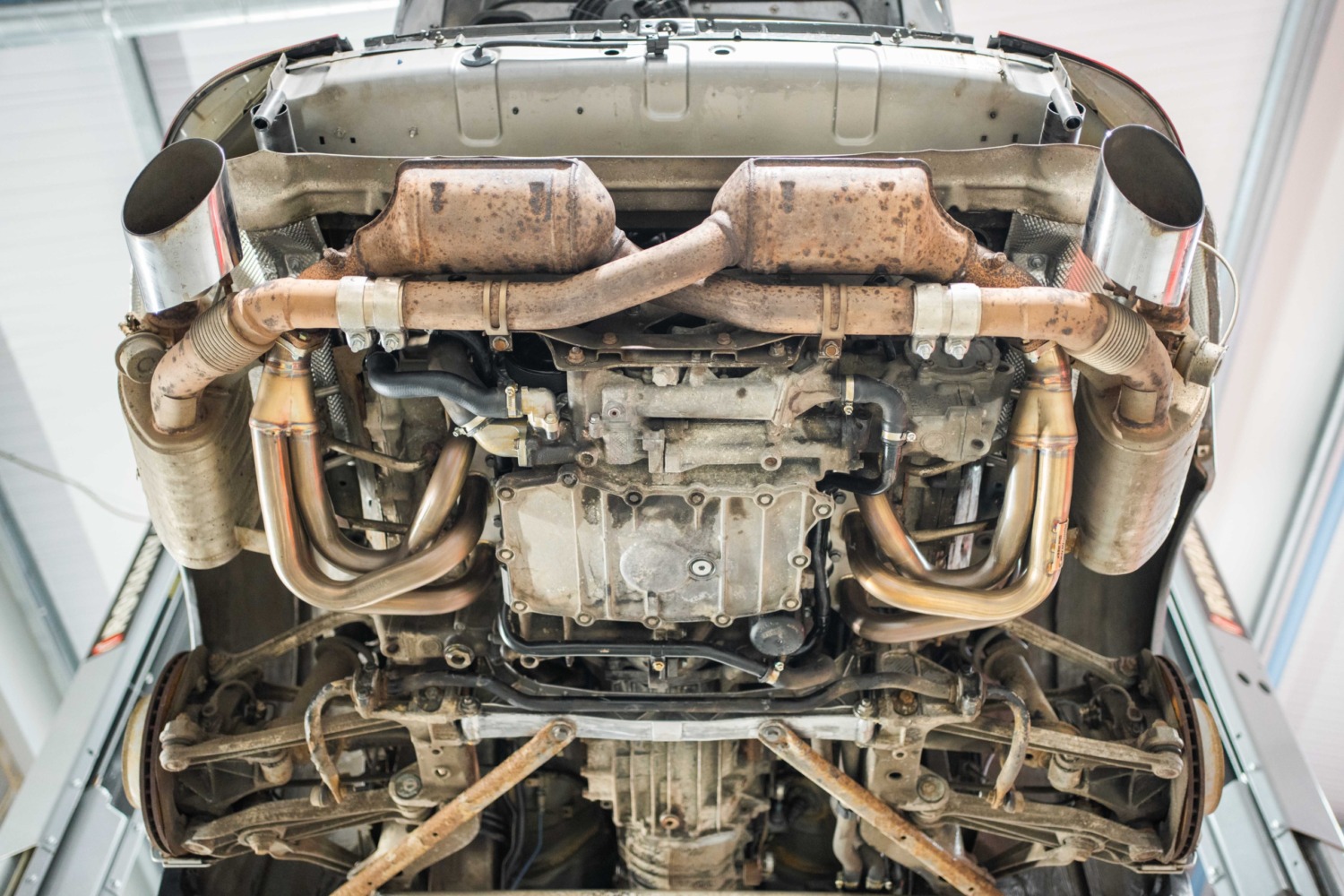
Our PPI is a thorough 3–5 hour inspection covering 240 individual points across the car, designed to identify both the obvious and less obvious potential issues. Unlike a standard visual check, we remove the wheels and undertrays to get a proper look at the components underneath. These are areas that aren’t covered as part of Porsche’s own inspections, but can reveal some very important information about the car’s condition.
We also measure brake disc thickness, this includes carbon ceramic discs. This requires specialist equipment and expertise that not every Porsche specialist is able to accommodate, particularly when it comes to PCCB systems. The aim isn’t simply to give the car a clean bill of health or produce a long list of things to worry about. It’s about giving you a clear picture of the Porsche you’re considering, so you can make an informed decision before committing to the purchase. All used cars will have wear of some description and therefore require a degree of prep work, hence why it is so valuable to have the Porsche inspected.
Health Check
A Porsche Health Check is more about checking in on a car you’re already familiar with. It’s a great way to make sure your Porsche is continuing to be properly cared for and to identify potential issues before they develop into something more significant. Rather than waiting for something to go wrong and then dealing with the consequences, a health check takes a more preventative approach.
We’ll look over the key mechanical, electrical and safety systems to identify anything that may require attention, whether that’s something that needs doing now or simply something worth keeping an eye on. Because with Porsches, as with most things in life, catching a small problem early is generally preferable to waiting until it becomes considerably more expensive.
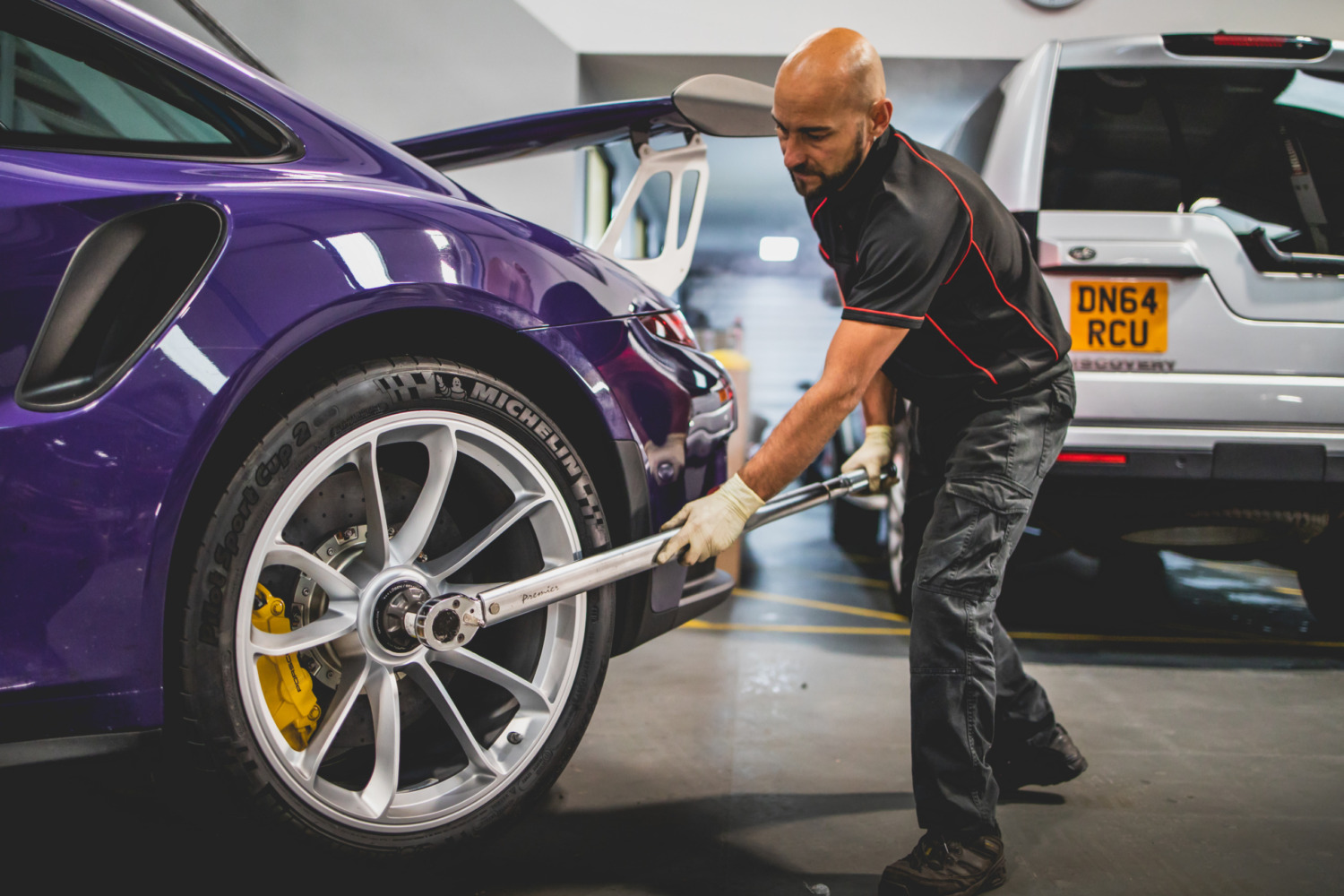
Brakes, tyres and suspension
Brakes, tyres and suspension components are some of the most important areas to inspect, particularly on a Porsche that is driven enthusiastically (which happens to be most of them). Brake discs and pads will be checked for wear and condition, while the suspension can be assessed for worn components, leaks and other signs of deterioration. Bushes, dampers, steering components and associated hardware can all develop issues over time, sometimes without producing an obvious warning to the driver.
Tyres also deserve more attention than simply checking the tread depth. Their age, condition, wear pattern and pressures can all tell you something about how the car is being used and whether there may be an underlying alignment or suspension issue. If worn suspension components are identified, they may need attention before they begin affecting other parts of the car such as tyres and overall ride.
Fluids and cooling systems
A health check will also include the fluids and cooling system. Engine oil and other essential fluids can be inspected for their condition and levels, while the cooling system can be checked for signs of leaks, deterioration or other potential problems. Cooling issues are particularly important to catch early; an inexpensive hose, seal or component can be considerably less expensive to deal with than the consequences of an overheating engine.
Think of it as the automotive equivalent of spotting a small leak in the roof before it becomes an indoor swimming pool.
Drivetrain and mechanical components
Somewhat depending on the model, an inspection will also cover key drivetrain components, including the engine, gearbox, clutch, driveshafts and associated systems.
For a classic Porsche, particular attention will be paid to known wear points or age-related issues. For a newer car, the focus may be different again. This is one of the reasons that having the car inspected by a Porsche specialist matters: knowing what to look for in every model from every era is just as important as knowing how to look.
Electronic diagnostics
Modern Porsches are packed with technology, and some faults won’t necessarily announce themselves with a dramatic mechanical noise. Electronic diagnostics can identify stored fault codes and provide useful information about the car’s various control units and systems. A diagnostic check will therefore complement the physical inspection, helping to uncover issues that may not be immediately apparent during a visual or road assessment.
If a warning light has appeared or something doesn’t quite feel right, Porsche specific diagnostics (PIWIS) can be particularly useful in establishing what’s going on.
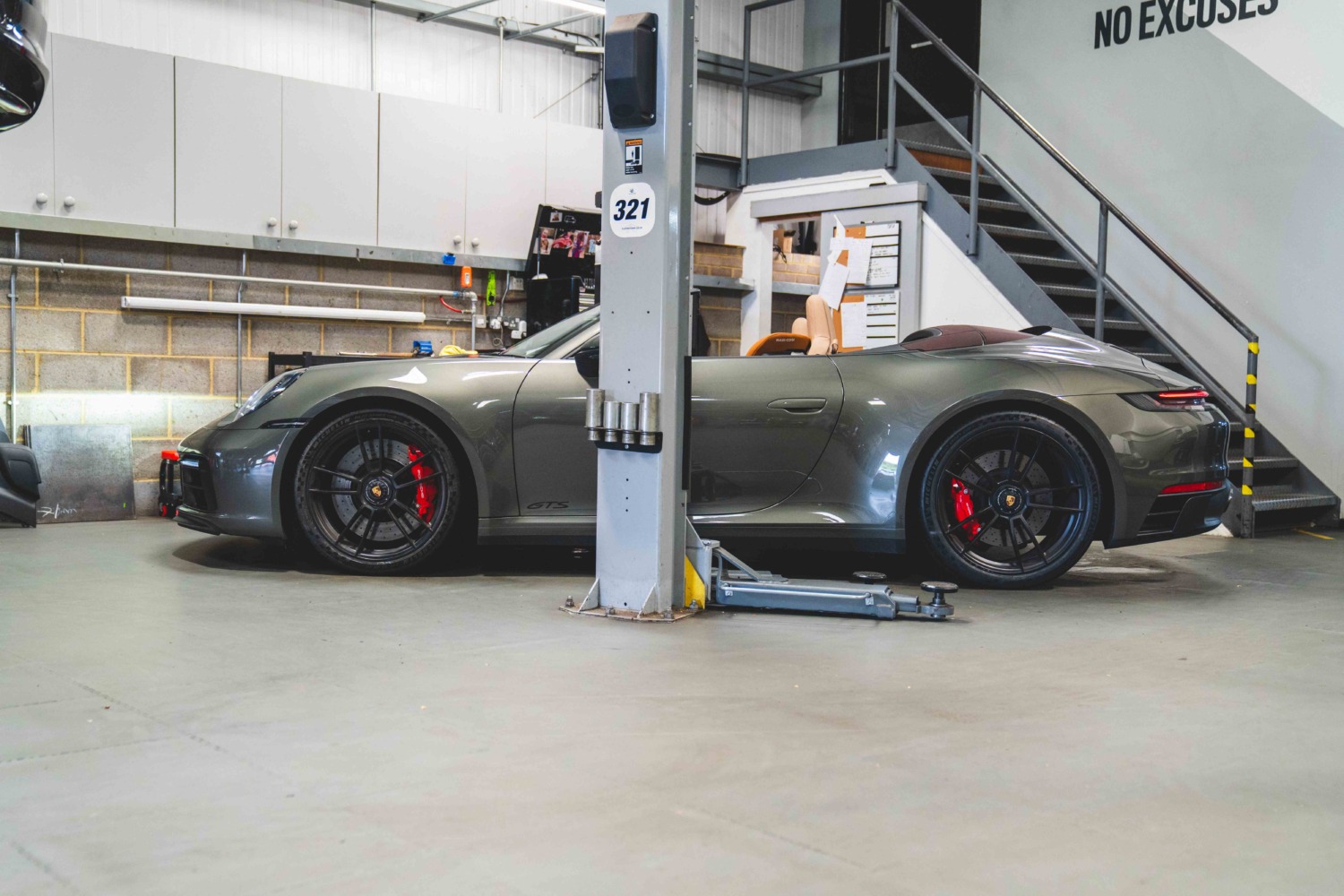
When should you book a Porsche inspection?
There isn’t really a bad time to check that your Porsche is healthy, but there are a few occasions when an inspection makes particularly good sense:
Before buying a Porsche privately or Through a Non-Specialist
This is perhaps the most obvious one. If you’re considering buying a Porsche privately or through a company who doesn’t specialise in Porsches, a PPI can give you valuable information before you commit to the purchase.
A car may look fantastic in photos, drive beautifully on a short test drive and still have issues that aren’t immediately obvious. An inspection can highlight areas that may require attention and, importantly, give you a better understanding of what you’re actually buying.
It can also provide useful information when negotiating a purchase. Finding out that a set of tyres, brakes or suspension components are approaching the end of their life before handing over the money is considerably more useful than discovering it a few weeks later.
After buying a Porsche
Even if you’ve already bought the car, an inspection can be worthwhile. Particularly if you’ve purchased privately or don’t have a detailed history of recent mechanical work. Think of it as establishing a baseline. You can find out what’s good, what’s getting tired and what might need attention, giving you a clearer plan for looking after the car.
Before a long journey
Planning a European road trip, a particularly ambitious drive or simply a long motorway slog? A Porsche health check before a long journey can provide some welcome peace of mind. Checking things are all in order before you leave is considerably preferable to discovering a problem several hundred miles from home.
After winter storage
If your Porsche has spent the winter tucked away, it’s often worth checking over before getting back out on the road. Tyres, brakes, battery, fluids and other components can all benefit from a proper inspection after a period of inactivity. And after months of looking at it through the garage window, the temptation to immediately disappear down the nearest B-road is understandable. A quick check first is still a good idea.
Before a warranty expires
If your Porsche is approaching the end of its warranty period, an inspection can also be sensible. Identifying an issue while the vehicle is still covered could save considerable expense later. It’s worth checking the terms and conditions of your particular warranty, but an inspection can help flag potential concerns before that cover runs out.
When something doesn’t feel right
This one is simple: trust your instincts. If the car is pulling to one side, making a new noise, vibrating under braking, feeling different through the steering wheel or simply not driving quite as it normally does, it’s worth getting it checked. You shouldn’t wait for the dashboard to light up like a Christmas tree.
Is a Porsche inspection worth the cost?
In most cases, the answer is yes, particularly when you consider what an inspection is intended to prevent. The cost of an inspection is relatively small compared with the potential cost of major mechanical repairs. Catching a worn component, developing leak or emerging fault early can give you the opportunity to deal with it on your terms, rather than waiting until it becomes a much bigger and more urgent problem.
It can also help you prioritise. Not every issue found during an inspection needs to be dealt with immediately. Some may be safety-critical, some may be advisable in the near future and others may simply be something to keep an eye on. That distinction is important. A good inspection shouldn’t be about finding faults for the sake of finding faults; it should give you an honest picture of the car and help you make sensible decisions about what happens next.
Why use a Porsche specialist?
Not all Porsches are the same, and neither are their potential problems. As a dedicated Porsche specialist, we work with these cars’ day in, day out and have experience with all of the common issues associated with different generations, engines, gearboxes and specifications. Our technicians have over 250 years of combined experience working on specifically Porsches, if there’s something to know, our technicians know it. They’ll also understand what is normal for a particular model and what deserves further investigation.
That’s particularly important with enthusiast-owned cars. A Porsche that has spent its life being driven properly and maintained carefully can be in excellent condition, while another that looks almost identical can have a very different story underneath. Our technicians work with every era of Porsche, from modern performance cars and daily drivers through to classics, racecars and specialist models. That experience means an inspection isn’t just about ticking boxes; it’s about really understanding what we’re looking at.
A small check can prevent a big headache
Nobody wants to spend money fixing something that could have been caught earlier. Equally, nobody wants to ignore a small issue and hope it goes away, only to discover that it has invited several of its friends along for the ride. A regular Porsche inspection gives you another opportunity to catch problems early, plan maintenance properly and make sure your car remains safe, reliable and enjoyable to drive.
Our inspections generally operate with a 2-3 week lead time, but we will always look to fit in the PPI in as timely a manner as we can. During peak seasons please give us a call to confirm booking lead times.
Whether you’re buying a Porsche privately, preparing for a long journey, bringing a car out of winter storage, approaching the end of a warranty or simply have a niggling concern, an inspection can provide meaningful reassurance. And if everything checks out perfectly? Even better. You get to carry on driving your Porsche knowing there’s one less thing to worry about.
For more comprehensive maintenance, see our Porsche servicing options. But if you have a Porsche you’d like us to check over, get in touch with the RPM Technik team. We’d much rather spot a small problem in the workshop than hear about a much bigger one from the hard shoulder!
LOOKING TO BOOK YOUR PORSCHE INSPECTION?
Please get in touch with our team for more information